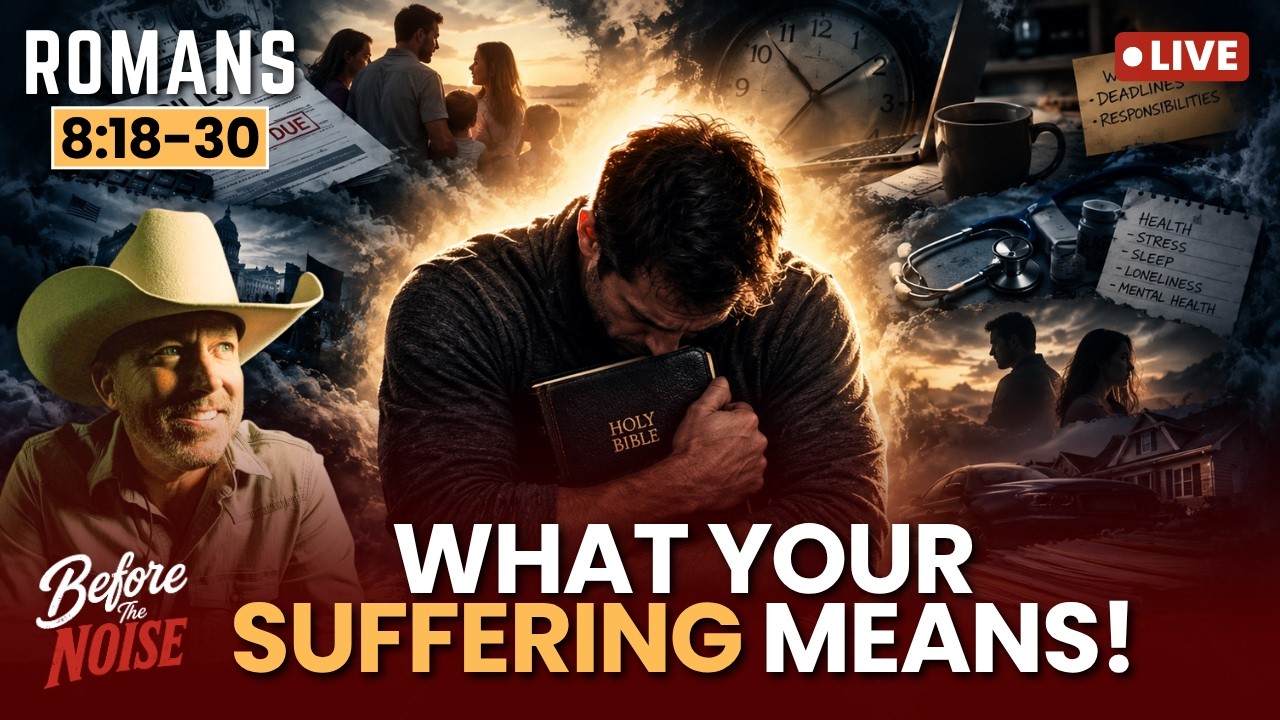
Apparently, This Is All Working Together for Good - Romans 8:18-30
Romans 8:18-30 Teaching Outline
"Apparently, This Is All Working Together for Good"
Central Question
- Can I trust that God has not lost the plot, even when I cannot understand the story?
Big Idea
- The groaning is real, but the groaning is not the ending.
- Present suffering cannot derail God's eternal saving purpose.
- Glory promised -> groaning in the middle -> glory secured.
Opening Hook
- "God, I know You have a plan, but right now it looks like You lost the paperwork."
- Sometimes we are praying but do not know what to pray.
- Our confusion does not mean God is confused.
- Our inability to see God's activity does not mean God is inactive.
- Movement: suffering -> groaning -> hope -> Spirit's help -> God's purpose -> glory.
Segment One: The Groaning Before the Glory
Romans 8:18-25
1. Weigh suffering against glory, Romans 8:18
- Paul "considers" suffering.
- He does not minimize suffering, he compares it.
- Suffering is real, but incomparable to coming glory.
- Faith does not deny pain.
- Faith recognizes that pain is not the only thing on the scale.
- Do not make eternal conclusions from temporary circumstances.
- Application: Am I evaluating God's goodness entirely by what is happening right now?
2. Creation is waiting, Romans 8:19-21
- Creation itself eagerly awaits redemption.
- Genesis 3 affected more than humanity.
- Creation was subjected to futility.
- The world is simultaneously beautiful and broken.
- Creation is not disposable, it will be liberated.
- Christian hope is not merely evacuation from creation.
- Christian hope is redemption, restoration and resurrection.
3. Creation groans like a woman in labor, Romans 8:22
- Paul's metaphor is childbirth.
- Groaning does not necessarily mean death.
- Labor pain points toward an arrival.
- The brokenness of creation points toward coming restoration.
- Teaching line: "The world isn't merely experiencing death throes. Paul says creation is experiencing birth pains."
4. Christians groan too, Romans 8:23
- Spirit-filled believers still groan.
- Faith does not require pretending everything is fine.
- Groaning is not evidence of unbelief.
- The Spirit is the "firstfruits."
- Firstfruits are evidence that more is coming.
- The Holy Spirit is the beginning and guarantee of the coming harvest.
5. Live in the "already, but not yet," Romans 8:23
- Already saved -> not yet glorified.
- Already adopted -> awaiting the fullness of adoption.
- Already filled with the Spirit -> awaiting bodily redemption.
- Already belonging to Christ -> awaiting resurrection.
- Christian salvation includes the redemption of the body.
6. Hope requires waiting, Romans 8:24-25
- Hope concerns what we cannot yet see.
- Biblical hope is confident expectation, not wishful thinking.
- Patience means steadfast endurance.
- Sometimes faith simply says, "I'm still here, Lord. I still trust You."
- Application: Can I trust what God has promised when I cannot yet see what God has promised?
Segment One Landing
- Creation groans.
- We groan.
- Something is coming.
- Glory is coming.
- Redemption is coming.
- Resurrection is coming.
- The groaning is real, but the groaning is not the ending.
Segment Two: God Has Not Lost the Plot
Romans 8:26-30
1. The Spirit meets us in weakness, Romans 8:26
- The Spirit helps us "in our weakness."
- Weakness does not disqualify us from God's activity.
- The Spirit's ministry is specifically directed toward our weakness.
2. Sometimes we do not know what to pray, Romans 8:26
- Paul includes himself: "we do not know."
- Spiritual maturity does not mean always having the answer.
- Sometimes the mature prayer is simply, "God, I don't know."
- Application: Can I trust God when I do not even know what outcome to ask for?
3. The Spirit enters our groaning, Romans 8:26-27
- Creation groans, Romans 8:22.
- Believers groan, Romans 8:23.
- The Spirit intercedes with groanings, Romans 8:26.
- God understands prayers that never become sentences.
- The Spirit intercedes according to God's will.
- We may not know God's will in the moment, but the Spirit does.
4. Move from "we do not know" to "we know," Romans 8:26-28
- Verse 26: "We do not know..."
- Verse 28: "We know..."
- We do not know why, when or how.
- We do know God is working.
5. Understand Romans 8:28 correctly
- Paul does not say all things are good.
- Evil remains evil.
- Suffering remains suffering.
- God works all things together for good.
- The goodness is not necessarily in the thing.
- The goodness is in the sovereign God who refuses to waste the thing.
- The cross is the supreme example.
- God can use what He hates to accomplish purposes He loves.
6. Focus on "according to His purpose," Romans 8:28
- Things do not simply "work themselves out."
- God works.
- God is not improvising.
- God has a purpose.
- The question becomes: What is that purpose?
7. God's definition of "good," Romans 8:29
- "Conformed to the image of his Son."
- Our definition of good often means comfort.
- God's ultimate definition of good is Christlikeness.
- God's primary purpose is not simply making life easier.
- God's purpose is making us like Jesus.
- Application: What if I am asking God to change circumstances He is using to change me?
- Suffering is not sovereign. God is.
8. Predestination as pastoral comfort, Romans 8:29
- Do not turn the passage into a theological cage match.
- Paul is comforting suffering Christians.
- God's purpose preceded our present suffering.
- Reformed emphasis: behind salvation stands the prior purpose and initiative of God.
- "Foreknew" carries relational and covenantal significance in the Reformed understanding.
- Predestination means suffering cannot derail God's saving purpose.
- Application: What circumstance am I treating as though it is more powerful than God's purpose?
9. The golden chain, Romans 8:29-30
- Foreknown.
- Predestined.
- Called.
- Justified.
- Glorified.
- God is the subject of the saving actions.
- The emphasis is God's initiative and faithfulness.
10. Notice the past tense, Romans 8:30
- "Glorified," not merely "will glorify."
- Glorification is future from our perspective.
- Paul speaks of it with the certainty of an accomplished reality.
- God's saving purpose is certain from beginning to end.
- Teaching line: "You are living in the middle of a story whose ending God has already secured."
11. Connect Romans 8:18 to Romans 8:30
- Verse 18: glory will be revealed.
- Verse 30: glorified.
- The passage begins with coming glory and ends with secured glory.
- Glory promised -> groaning in the middle -> glory secured.
12. Prepare for Romans 8:31-39
- If God foreknew...
- If God predestined...
- If God called...
- If God justified...
- If God glorified...
- Then: "If God is for us, who can be against us?"
- Save the full implications for the next study.
Final Application
- What suffering has made me question God's purpose?
- What unanswered prayer has made me assume God is inactive?
- What failure have I treated as greater than God's grace?
- What circumstance am I treating as more sovereign than God?
- Can I trust God's character when I cannot trace God's hand?
- Can I believe God's purpose is secure even while I am still groaning?
Final Progression
- We suffer.
- We groan.
- We wait.
- The Spirit helps.
- God works.
- God conforms.
- God glorifies.
Closing Truth
- I may not know what God is doing.
- God does.
- My weakness is real.
- My suffering is real.
- My questions are real.
- But none of them are sovereign.
- God is.
- The groaning is not the ending. Glory is.

Chad Prather is a fast-talking philosopher in a cowboy hat, blending sharp wit, Southern charm, and bold truth in every message he delivers. A viral sensation known as “The Political Cowboy,” Chad has captivated millions through his no-nonsense videos, top-rated The Chad Prather Show podcast, sold-out comedy tours, and media appearances on Fox News, CNN, and BlazeTV. He’s toured internationally, released hit music albums, authored “Am I Crazy?” and “Born for Meaning.”
Whether he’s tackling politics, culture, or faith, the “Pickup Truck Pundit,” brings a rare mix of humor, heart, and conviction that fires up audiences and challenges them to live boldly. He’s a best-selling author, chart-topping musician, former Texas gubernatorial candidate, and one of America’s most engaging voices for common sense in a world gone sideways.