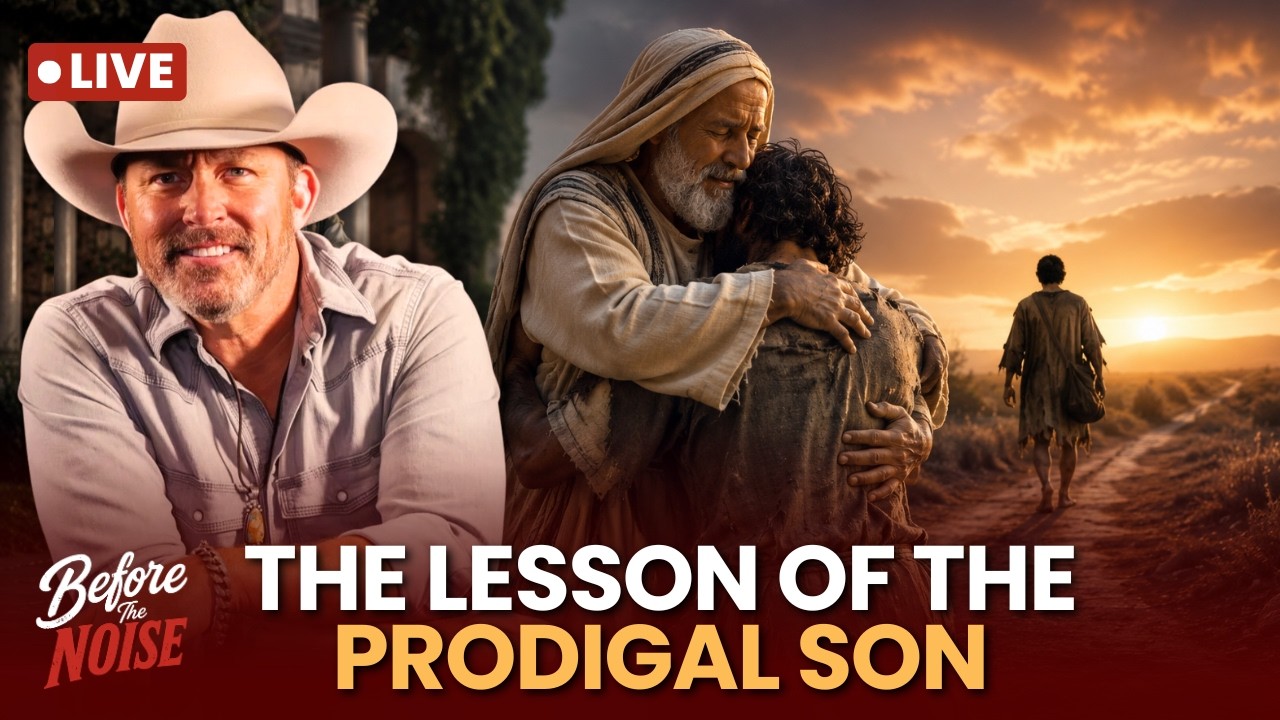
You Can Be Lost and Never Leave Church - Luke 15:11-32
You Can Be Lost and Never Leave Church
Luke 15:11-32
Segment 1: Give Me What Is Mine
Luke 15:11-16
- Context: Luke 15:1-2
- Tax collectors and sinners draw near to Jesus.
- Pharisees and scribes criticize Jesus for receiving sinners.
- Jesus responds with three stories about lostness: the sheep, the coin, and the sons.
- Step 1: The heart leaves before the feet leave - Luke 15:11-12
- "Father, give me the share of property that is coming to me."
- The son wants the father's possessions without the father's presence.
- Sin begins with a disordered relationship with God.
- The essence of sin is wanting God's gifts without wanting God.
- Connection to Genesis 3: the temptation toward autonomy.
- Application: If God gave me everything I wanted, would I still want God?
- Step 2: God allows the son to leave - Luke 15:12
- The father divides the property.
- God does not force relationship.
- Sometimes judgment takes the form of God allowing us to pursue what we insist upon.
- Connection to Romans 1: "God gave them up."
- Step 3: The far country promises freedom - Luke 15:13
- The son travels away from the father.
- Rebellion creates distance.
- Sin advertises the departure but hides the destination.
- What looks like freedom eventually becomes bondage.
- Connection to James 1:14-15: desire, sin, and death.
- Step 4: Sin squanders what God gives - Luke 15:13
- The son wastes his inheritance in reckless living.
- Sin consumes rather than creates.
- We can squander time, bodies, relationships, influence, money, sexuality, and opportunities.
- Application: What has God entrusted to me that I am failing to steward?
- Step 5: The famine reveals reality - Luke 15:14
- The famine does not create his spiritual condition, it exposes it.
- Circumstances reveal the weakness of self-sufficiency.
- Created things cannot carry the weight meant for the Creator.
- Application: What is actually holding my life together?
- Step 6: Freedom becomes slavery - Luke 15:15-16
- The Jewish son ends up feeding pigs.
- He escaped one authority only to submit to another.
- Connection to John 8:34: sin becomes a master.
- He began by saying, "Give me."
- He ends with "no one gave him anything."
- The world will help spend your inheritance but will not restore you when it is gone.
- Closing truth
- There is always a famine in the far country.
- God's presence, not merely God's provision, is the source of life.
- Psalm 16:11: fullness of joy is found in God's presence.
- The son has exhausted his resources, but he has not exhausted the father's mercy.
Segment 2: He Ran to His Son
Luke 15:17-24
- Step 1: Repentance begins with awakening - Luke 15:17
- "He came to himself."
- Sin distorts reality.
- Repentance begins when we finally see ourselves, our sin, and God clearly.
- The son remembers the goodness of his father.
- Connection to Romans 2:4: God's kindness leads us toward repentance.
- Step 2: Repentance requires movement - Luke 15:18
- "I will arise and go to my father."
- Remorse is not the same as repentance.
- Remorse regrets consequences.
- Repentance changes direction.
- Conviction says something needs to change.
- Repentance gets up.
- Step 3: True confession owns the sin - Luke 15:18-19
- "I have sinned against heaven and before you."
- No excuses.
- No blaming circumstances.
- No blaming other people.
- Connection to 1 John 1:9.
- Confession means agreeing with God about what He already knows.
- Step 4: The son still misunderstands grace - Luke 15:19
- "Treat me as one of your hired servants."
- He understands his guilt but misunderstands his father's grace.
- He wants to earn his way back.
- Religion says, "Let me work off my debt."
- Grace says the debt must be received as paid.
- Step 5: The father runs - Luke 15:20
- The father sees him while he is still far away.
- He has compassion.
- He runs.
- He embraces.
- He kisses.
- The father receives him before he can repair his life.
- Grace meets us while we still carry the evidence of the far country.
- Step 6: Grace does not ignore justice - Romans 3:26; 2 Corinthians 5:21
- God is both just and the justifier.
- Christ bears the judgment of sinners.
- The cross is where holiness and mercy meet.
- Forgiveness is free to us because it was costly to Christ.
- Step 7: The father restores sonship - Luke 15:21-22
- The son begins his confession.
- The father interrupts his attempt to negotiate servanthood.
- The robe represents honor.
- The ring represents belonging and family authority.
- The sandals distinguish sonship from slavery.
- The father does not place him on probation, he restores him.
- Step 8: Salvation produces celebration - Luke 15:23-24
- "This my son was dead, and is alive again."
- "He was lost, and is found."
- Christianity is not self-improvement.
- Salvation is resurrection.
- Connection to Ephesians 2:1-5.
- Closing truth
- We do not work for acceptance, we work from acceptance.
- We do not clean ourselves up so we can come to Christ.
- We come to Christ because we need Him to make us clean.
- The son thought he was coming home to negotiate employment.
- Instead, he walked into a celebration of sonship.
- The Father runs toward repentant sinners.
Segment 3: The Son Who Never Left
Luke 15:25-32
- Step 1: Jesus turns toward the religious - Luke 15:25
- The older brother represents the Pharisees of Luke 15:1-2.
- The sinners are coming home.
- The religious people are complaining about the celebration.
- Jesus reveals a second kind of lostness.
- Step 2: You can be lost without leaving the house - Luke 15:25-28
- The older brother is physically near the father but relationally distant.
- One brother is lost through rebellion.
- The other is lost through self-righteousness.
- Religious activity is not the same as intimacy with God.
- Application: Am I near the things of God without truly loving God?
- Step 3: Grace offends self-righteousness - Luke 15:28
- The older brother becomes angry.
- Grace feels unfair when we believe we have earned God's favor.
- Romans 3:23: all have sinned.
- If God gave us what we deserved, none of us would be at the table.
- Step 4: The father goes out to both sons - Luke 15:28
- He runs toward the rebellious son.
- He goes out and pleads with the religious son.
- Grace pursues immoral people and moral people.
- Both kinds of lostness require the Father's mercy.
- Step 5: Religious obedience can become transactional - Luke 15:29
- "These many years I have served you."
- The older brother thinks like a slave while living as a son.
- The younger brother says, "Give me what is mine."
- The older brother says, "Give me what I have earned."
- Both are trying to use the father to obtain something else.
- Application: Why do I obey God?
- Step 6: Self-righteousness creates entitlement
- "I've served."
- "I've obeyed."
- "I've sacrificed."
- "Therefore God owes me."
- Obedience becomes leverage instead of worship.
- The gospel says everything we receive from God is grace.
- Step 7: Self-righteousness produces contempt - Luke 15:30
- "This son of yours."
- He refuses even to call the prodigal his brother.
- When we forget grace, we begin dividing people into deserving and undeserving.
- Ephesians 2:8-9 eliminates boasting.
- The ground is level at the cross.
- Step 8: The Father Himself is the inheritance - Luke 15:31
- "Son, you are always with me."
- The older brother is complaining about a goat while possessing fellowship with the father.
- Comparison makes us blind to grace.
- Gratitude recognizes what we have already received.
- Application: Am I so focused on what God has not given me that I have forgotten that He has given me Himself?
- Step 9: Restored sinners become family again - Luke 15:32
- The older brother says, "This son of yours."
- The father responds, "This your brother."
- Do not distance yourself from someone God has restored.
- Connection to Galatians 6:1.
- The church should reflect the Father's ministry of restoration.
- Step 10: Jesus leaves the story unfinished
- We are never told whether the older brother enters the celebration.
- Jesus leaves the Pharisees with a decision.
- "Are you coming inside?"
- Can we celebrate when God's grace reaches someone we believe does not deserve it?
- Step 11: Jesus is the true Elder Brother - Luke 19:10
- The older brother refuses to seek the lost younger brother.
- Jesus came "to seek and to save the lost."
- Christ entered our far country to bring us home.
- He did not merely risk His inheritance.
- He gave His life.
Final Gospel Truth
- There are two ways to be lost:
- Rebellion: "I don't need the Father."
- Religion: "The Father owes me."
- Both sons need repentance.
- Both sons need grace.
- Both sons need the Father.
- The cross destroys both rebellion and self-righteousness.
- If you are running from God, come home.
- If you are trying to earn from God, come inside.
- If you are ashamed of your past, look at the Father.
- If you are proud of your performance, look at the cross.
- If you resent another person's restoration, remember how much you have been forgiven.
- At the Father's table there are no self-made sons or daughters.
- There are only recipients of grace.

Chad Prather is a fast-talking philosopher in a cowboy hat, blending sharp wit, Southern charm, and bold truth in every message he delivers. A viral sensation known as “The Political Cowboy,” Chad has captivated millions through his no-nonsense videos, top-rated The Chad Prather Show podcast, sold-out comedy tours, and media appearances on Fox News, CNN, and BlazeTV. He’s toured internationally, released hit music albums, authored “Am I Crazy?” and “Born for Meaning.”
Whether he’s tackling politics, culture, or faith, the “Pickup Truck Pundit,” brings a rare mix of humor, heart, and conviction that fires up audiences and challenges them to live boldly. He’s a best-selling author, chart-topping musician, former Texas gubernatorial candidate, and one of America’s most engaging voices for common sense in a world gone sideways.